Articles by "BUSINESS"

Showing posts with label BUSINESS. Show all posts

The International Monetary Fund (IMF) advised the federal government to give more priority to investment in infrastructure so as to address the high level of poverty in Nigeria.

The Director, African Department of the IMF, Abebe Aemro Selassie, made this call at a media briefing on Sub-Saharan African economies at the on-going IMF-World Bank spring meetings in Washington DC, United States.


Selassie pointed out that the economic situation in Nigeria remained difficult despite its tremendous resources. He, however, urged the government to look for ways to mitigate the weak economic situation on the  poorest.

“You know the fact is that the country has moved from a period when oil prices were $100 per barrel for five or six years or more, to where they are now. But it’s a huge hit on the income of the country and the government’s revenue. The government has a lot of public services it has to provide which need to be financed and so alternative sources of financing have to be found for that. Which particular tax system they want to use, of course is up to the government.

“But without that, the government’s objective of addressing poverty, you need infrastructure investment to be able to do that, you need to build more schools and you need to invest more in health and education. All of these require resources. So, you know it’s imperative for the government to be able to address its long-term developed agenda to have tax handles to be able to generate revenue,” he added.

The IMF official noted that in countries hardest hit by commodity price decline, especially oil exporters like Angola and Nigeria, the budgetary revenue losses and balance of payment pressure were continuing. He, however, warned that the delay in much-needed reforms in those regions was creating uncertainty, holding back investments, generating risks as well as even creating deeper difficulties in the future.

Selassie also said the IMF was concerned about famine in South Sudan and the North-eastern Nigeria, which he said had created significant humanitarian concerns, saying that addressing the problems in those countries would pave the way for the restoration of economic conditions in those countries.

“2016 was a difficult year for many countries. Economic growth in 2016 is estimated to have reached only one and a  half per cent, which is the weakest outcome in more than two decades, and below the rate of population growth. While a number of countries continue to grow robustly, the slowdown in growth has been broad, affecting about two-thirds of countries that together account for more than four-fifth of regional GDP. This contrasts with the fairly robust growth rates the regions has experienced in recent years.

“Inflation has also begun to accelerate in some countries reflecting widening macroeconomic imbalance, currency depreciations and drought-related food price increases. Looking ahead, the outlook is foreseen to remain subdued. Growth in the region is expected to rebound modestly to two and a half per cent in 2017. However, this falls short of past trends and barely delivers any per capital gains,” he added.

Selassie explained: “The uptick in growth is largely driven by one-off factors in the three largest economies- a recovery in oil production in Nigeria, higher public spending ahead of elections in Angola, and the fading of drought effects in South Africa. This aggregate number hides considerable differences across the region, with some of the largest Western and Eastern Africa countries expected to continue to grow at five to seven and a half per cent.”

“The outlook remains subject to external risks, including further appreciation of the U.S dollar and a tightening of financing conditions, especially for countries where fundamentals have deteriorated, and a broad shift towards inward-looking policies, including protectionism, that could reduce trade and impede global growth. In addition, the outlook is clouded by the incidence of drought, pests, and security issues that have contributed to an increase in food insecurity and even famine in parts of sub-Saharan Africa. This humanitarian crisis needs to be urgently addressed,” he, however, pointed out.

Meanwhile, the  Acting Director, Corporate Communications Department, Central Bank of Nigeria (CBN), Mr. Isaac Okorafor, has said that the  call by the IMF and World Bank on the CBN to float the naira and liberalise the market, was “laughable,” citing the case of Egypt where inflation has skyrocketed.

“We are 180 million people, our infrastructure is so  poor and the productive capacity cannot be fast enough to rise to benefit from massive depreciation. If you float the naira today, and given the discoveries by security agencies, you’ll discover that our case will be terrible. Egypt today has an inflation rate  of almost 31 per cent, remember Angola also has about 36 per cent inflation, ours is at 17.26 per cent.

“If we float the naira and we allow speculators and those with corruption money and all the people who create the bubbles to launch into the market, you can imagine the kind of situation we will find ourselves. Of course, you should also know that no country floats its currency, just leaving it to the dictates of the market. Our economy has its own peculiarities, and we cannot kill our people in the name of floating the naira,” the CBN spokesman said during a media briefing at the IMF-World Bank meetings.

Africa’s richest man, Aliko Dangote is set to Launch Wednesday a new subsidiary Dangote Rice, which will massively plant rice on 25,000 Hectares in Sokoto, Jigawa and Zamfara states, in north west Nigeria.

The rice will be available by the end of this year, possibly before Christmas.


The large scale rice farming has the prospect of providing hundreds of thousands of employment opportunities for the rural inhabitants under an outgrower scheme.

President of the Group, Aliko Dangote disclosed at the weekend that the Company will flag off with a pilot project of 500 ha by Gonroyo Dam, in Goronyo community in Sokoto state on Wednesday. Gonroyo dam is the second largest in the country, after Kainji.

Aliko Dangote
The flag off ceremony which will be performed by the governor of the state, Alhaji Aminu Tambuwal will witness seedlings being distributed to the primary local farmers who will in turn plant the seed after which Dangote Rice company will purchase from them for milling and final processing.

Sokoto state is the second after Jigawa out of the 14 states spread across the state where Dangote Rice plans to operate outgrower scheme to empower local farmers and create job opportunities for community dwellers and reduce migration to the cities.

Dangote Rice projects in the 14 states, when, operational, will generate a significant number of jobs and increase take-home income for smallholder farmers, all while diversifying Nigeria’s economy and reducing the nation’s food import bill.

Statistics from the Federal Ministry of Agriculture and Rural Development (FMARD) estimates that rice demand in Nigeria reached 6.3 million MT in 2015, with only 2.3 million MT of that demand satisfied by local production.

This local production shortfall leaves a gap of 4.0 million MT that is currently being filled through formal importation of rice or illegal imports over land borders.

By year-end 2017, Dangote Rice plans to produce 225,000 MT of parboiled, milled white rice. This will allow us to satisfy 4% of the total market demand within 1 year. Our model can then be successfully scaled to produce 1,000,000 MT of milled rice in order to satisfy 16% of the domestic market demand for rice over the next 5 years.

Due to the current economic crisis, domestic prices for agro-commodities have risen dramatically over the last 12 months, making local agriculture an attractive investment. Dangote Rice Limited seeks to take advantage of this economic trend and the favourable policies laid out in the FMARD’s Agricultural Transformation Agenda.

Dangote Rice has a mandate to locally produce high-quality milled, parboiled rice for the Nigerian market. This goal will be achieved by sourcing the raw material (paddy) required from the Dangote Rice Outgrower Scheme.

Through the Dangote Rice Outgrower Scheme, DRL will partner with outgrowers (smallholder and contract rice farmers) to cultivate and grow rice paddy. Specifically, DRL will provide inputs, technical assistance, extension services and land preparation services and equipment directly to farmers. At harvest, DRL will recoup the costs of inputs and services in-kind and will act as a guaranteed offtaker for paddy that meets certain pre-agreed quality standards. Smallholder farmers will provide land and labour.

The centralized outgrower model enables a high level of control over product quality and quantity. The purchasing price given to farmers will reflect each season’s market price and will be set after an extensive market price survey and consultation with all stakeholders.

In the short-term, Dangote Rice will be responsible for importing all of the inputs needed for cultivation and making them available to the outgrowers.

By end of 2017, Dangote Rice will have 25,000 Ha under rice cultivation across 3 sites in Northern Nigeria having identified rice-growing communities in Jigawa State (5,000 Ha), Sokoto State (10,000 Ha) and Zamfara State (10,000 Ha).

The 25,000 Ha will be farmed by nearly 50,000 outgrowers in the selected site areas. These outgrowers are already organized into cooperative associations. We will engage with these organizations to register and sign contracts with each farmer.

In addition to the outgrowers, an additional ~260 jobs will be created by year-end 2017. These individuals will serve as agronomists, credit officers and staff of the mill.

Upon harvest, Dangote Rice will offtake rice paddy and transport the paddy to be processed. One centralized mill will mill the stored paddy rice from all 3 sites.

Dangote Rice plans to produce one million MT of rice from 150,000 Ha in the next 5 years over. They intend to accomplish this by scaling the business model described above to more sites and rice growing communities. These communities have been identified and relationship building and sensitization has already begun. In addition to scaling the above model, DRL will establish and manage a high-quality seed development farm at Numan in Adamawa to reduce the costs of seeds.

Dangote Rice will establish raw material reception, drying, hulling, parboiling units and silos in strategic areas throughout the country near our additional outgrower communities. Each site will store dried, hulled, parboiled bran rice. DRL will then transport this bran rice to a mill, where finished rice will be produced.

Govt recovers N54.1 billion through whistleblowing policy
Nigeria is considering a new debt service provisioning of N361 billion ($1.2 billion) for the $1 billion (N305.1 billion) Eurobond which was acclaimed to have been over-subscribed.

When consummated, the development will not only add to the country’s debt stock, its current debt service provision at over N1.4 trillion will rise, and it will deepen the troubled debt-to-revenue ratio which has been impeding the country’s ability to freely finance growth projects.

Government had said its 15-year Eurobond offer was priced at 7.875 per cent, with a lump sum repayment of the principal ($1 billion) at the due date – February 2032.

The investors had opted for a higher yield to cover their assessed risks or devaluation in early negotiations, asking for a 7.5 per cent for a 10-year period or eight per cent and above for a 15-year period, due to foreign exchange crisis and other macroeconomic issues.
However, the aggregate cost for the deal at the offering rate may not be less than N361 billion at the prevailing official exchange rate, considering that investors would be paid in dollar, representing a yearly average cost of about N24.1 billion ($79 million).

A popular economist who would not want his name in print told The Guardian that the net proceeds of the Eurobond would naturally be less than the amount quoted due to service charges incurred in the process, “but we would be debited with $1 billion.”

“If you factor in these costs, you begin to ask whether we should have been here. It is irritating that in the midst of these challenges, misappropriation, huge governance cost and outright embezzlement of public fund still persist.

“The budget items of some ministries are clear fraud and these have put the country on an unsustainable path. What is there to celebrate about the Eurobond? Is it that we are now committing our young generations, even the unborn, to poverty and immediate struggle?” the economist queried.

But the Minister of Finance, Mrs. Kemi Adeosun, in a statement, said: “Nigeria is implementing an ambitious economic reform agenda designed to deliver long-term sustainable growth and reduce reliance on oil and gas revenues while reducing waste and improving the efficiency of government expenditure.

“We are establishing the building blocks for long-term growth and making the hard decisions that must be made to reset our economy appropriately.”

The Director-General of Debt Management Office, Dr. Abraham Nwankwo, also said: “Nigeria is delighted to have successfully priced its third Eurobond issue…The Eurobond is the latest step in a broader debt strategy designed to significantly re-balance our debt profile towards longer term financing and reduce the burden of interest on our annual budget.”

A director at Union Capital Markets Limited, Egie Akpata, said he was sure that the country would raise the amount and predicted an oversubscription earlier, but expressed worry on the pricing, which he said would have been a lot lower if the fundamentals did not get this bad.

“Eurobond is the easiest platform for international fund raising for the country now, because there is no string attached, unlike the International Monetary Fund and the World Bank.

“With the assurance that our daily oil earnings may be more or less this amount, it is not a ‘back breaking’ deal. But considering the exchange rate, local debts would be better off, as the total cost incurred would be less,” he said.

The Executive Director of Centre for Human Rights and Conflict Resolution, Idris Miliki, said with the President’s absence, investors’ risk assessments would always be on the high side.

Besides, he said that both investors and those in acting capacity would approach with caution any economic decision now, because the truth about the head of government is shrouded in uncertainty and that is a risk for investment.

Meanwhile, the Federal Government’s whistleblower policy has so far led to the recovery of $151 million and N8billion in looted funds.

The government yesterday said it would not disclose the identities of the whistleblowers or make public when they would receive the 2.5 to 5 per cent reward promised.

If the whistleblowing policy is well managed, it will boost the fight against corruption so that the nation’s resources can be used to develop the country rather than allowing corrupt leaders to siphon them for use only by their families.

In an interview with The Guardian, Minister of Information and Culture, Alhaji Lai Mohammed assured that government would not renege on its promise, arguing that disclosing the identities of the whistleblowers or when they would be rewarded would jeopardise the entire programme.

“We cannot disclose to you when where or how the whistleblowers will be paid, the moment we do that, we have blown their cover and this will jeopardise the entire programme so we have to protect their identities. But nobody will receive anything below 2.5 per cent, there is no question about that,” he said.

The Federal Ministry of Finance in December 2016 devised a whistleblower policy aimed at encouraging anyone with information about a violation, misconduct or improper activity that impacts negatively on Nigerians and government.

The policy stipulated that “In order to encourage Nigerians to key into the whistleblowers’ scheme, if there is a voluntary return of stolen or concealed public funds or assets on the account of the information provided, the whistleblower may be entitled to anywhere between 2.5 per cent (minimum) and 5.0 per cent (maximum) of the total amount recovered.”
Reacting to the development, the lead Director, Centre for Social Justice (CSJ), Eze Onyekpere expressed reservations over the authenticity of government’s claim and demanded that it tells Nigerians where the recovered money would be deployed.

“They should tell us from who they recovered the money and where they want to deploy it. It’s quite difficult for anybody to believe, so he should tell us from who they recovered the money and what they want to do with it because it is a lot of money, you are talking of over N45 billion by the official exchange rate. He can claim anything, nobody is sure of what he is saying.”

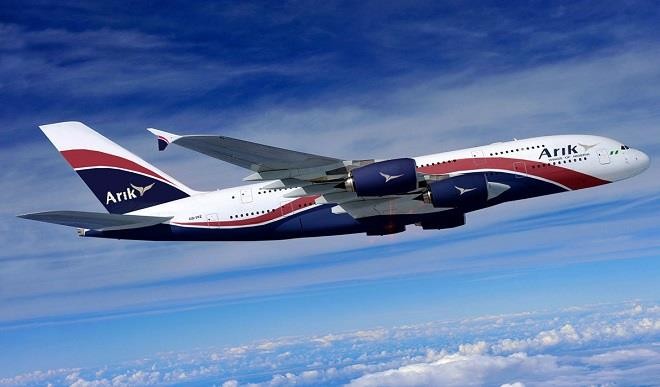
Arik Air, the largest Nigerian carrier taken over last week by the Federal Government would require N10bn to return to full and uninterrupted flight operations.

The Asset Management Corporation of Nigeria (AMCON) which took over the management of the airline on behalf of the government said it discovered "deep rooted rot" at Arik Airlines.

The new management in a statement on Sunday said "The situation is so bad that only nine aircrafts out of the 30 in the fleet of the airlines is operational. 21 of them have either been grounded, gone for C-check in Europe among other forms of challenges.

"As if these problems are not enough, the airline does not have money to procure aviation fuel for the nine operational aircrafts because no dealer wants to sell aviation fuel to Arik if it is not on cash-and-carry basis. This also calls for public understanding because flight schedules may be realigned based on the nine aircrafts that are available, technically sound and ready for flight operation".

It was also discovered that Arik also owes its technical partners and also in perpetual default in its lease payments and insurance premium, leading to regular and embarrassing squabbles with different business partners, which accounts for why 21 aircrafts is off the fleet for different reasons. 

All these problems in addition to huge staff salaries, which have remained unpaid for 11 months; vendors that supply different items to Arik Airlines that are also owed meant that Nigerians may have to tarry-a-while to allow the new management clean up the huge mess at the airline before Arik would finally resume uninterrupted flight.

The new Chief Executive Officer of Arik Airlines, Capt. Roy Ukpebo Ilegbodu, a veteran aviation expert under the receivership of Mr. Oluseye Opasanya, SAN however reassured Nigerians that these issues; though daunting, would be gradually resolved to enable Arik Airlines, which carries about 55% of the load in the country recover the 21 aircrafts. 

He maintained that the recent intervention was in the best interest of all stakeholders, the general public, workers, creditors and other aviation interest groups in the country.

Qatar Airways has launched what it says is the longest current non-stop commercial route, after completing a journey from Doha to Auckland.

Flight QR920 landed on Monday after 16 hours and 23 minutes, slightly quicker than expected.

The Boeing 777-200LR jet was showered with water cannons on arrival - a tradition for airlines on new routes.

Carriers like to talk up these records, but how are they measured and do they really matter?

Measuring flights can be complicated

Longest (time) or furthest (distance) are the two key distinctions to make, but it's not as simple as it might sound.

Qatar Airways' new route maybe the longest by time. But the 14,535km (9,032 miles) trip is not the longest existing flight by distance - a claim currently held by Air India's Delhi to San Francisco route which is 15,127 km.

The distance between two cities doesn't vary for airlines of course, but they might choose to take alternate routes. For example, a carrier might choose to avoid flying over certain countries which can alter how far a plane flies from point A to point B.

But regardless of the route, flight time is dependent on headwinds or tailwinds.

For example Qatar's return leg form Auckland to Doha is is expected to take about 18 hours because of headwinds.

"The longest flying time doesn't always correspond with the longest distance," says Ellis Taylor of Flightglobal.

"Of course, from a passenger perspective, the flying time is probably the best measurement."

Long-haul flights are essential to the business

Record-breaking flights may make headlines. But new long-haul flights mean nothing if they're treated as a standalone route, says Mr Taylor. Rather, it's what a new route brings to the airline's existing networks

"On its own, it wouldn't be viable to fly between Auckland and Doha, but Qatar is focusing on the passengers from Auckland going on to Europe, Africa, the US or elsewhere," says Mr Taylor.

"In that light, even though it may take some time for the route to stack up from a profit perspective, it may help the economics of its wider network."

Historically, most of the major long-haul routes have been serviced by legacy airlines like Singapore Airlines and Australia's Qantas.

But adding new routes have allowed newer airlines like Qatar, and perhaps most notably Emirates, to expand their business very rapidly.

"It's also about reach for Middle East airlines striving to outdo each other," says Geoffrey Thomas of Airlineratings.com.

Records are there to be broken

Longest flight records will continue to change hands as airlines launch new routes, and the range capability of aircraft improves.

Last year, for example, Qantas revealed it would fly direct between Perth and London from March 2018, a flight that will take 17 hours.

The price of fuel and the types of planes which airlines buy will be the determining factors in opening new routes

"With the arrival of the 777-8X in 2022, new records such as flights from Sydney to New York and Sydney to London will be set," says Mr Thomas. "The 777-8X will be the ultimate long haul airliner."

But remember, for routes to be viable, they also require people to buy tickets.

That depends on passengers being willing to sit in their seats for 16, 17 or maybe 18 hours at a time. How long that desire will last (especially for travellers cramped up in economy) is something airlines will monitor carefully.

The most popular Ponzi scheme in Nigeria, MMM Nigeria, is preparing to resume operations after freezing the accounts of its particiP@nts in mid-December.

The scheme, via its website, asked particiP@nts, whose accounts were frozen, to perform “Promo Tasks: A New Tool for MMM Community Development”.

The tasks, which would be done both online and offline, is expected to promote the scheme and drive “traffic and participation” by the time the handlers lift the freeze on January 13, 2017.

In a statement on it website, the handlers said: “Being an MMM member implies not only opportunities, but also a responsibility for the state and development of the MMM Community. MMM is our home, and we are responsible to build and refine it. “A lot of particiP@nts genuinely want to promote MMM, spread its ideology amongst people, though not always knowing what exactly has to be done. Therefore we have created a new PromoTasks section in the PO, which is added with various tasks: online and offline, easy and complicated, individual and team-oriented

MMM NIgeria promo task

“A member who will perform these tasks will be benefited, because the tasks will allow him to attract new referrals, build his structure (and get bonuses for that), and it will be useful the whole Community, because more people will learn about MMM and its ideology.”

MMM NIgeria promo task “A member who will perform these tasks will be benefited, because the tasks will allow him to attract new referrals, build his structure (and get bonuses for that), and it will be useful the whole Community, because more people will learn about MMM and its ideology.”

MMM Nigeria handlers also said via the statement that a “task may guide a member to join a Facebook group and write a comment to create some tweets on Twitter, like a YouTube video, share news on Google Plus, and make your website”

“There are also offline tasks: conducting home sharings, cafe meetings, organizing MavroPicnics, MavroParties or MavroGames,” it said. “Doing the tasks you contribute to the Community’s progress.
Thanks to you and other members doing the tasks, MMM gains more popularity in social media and gets more registrations and PHs.

MMM needs you and depends on your activity! “It is obvious that the activity of MMM Nigeria members is growing. MMM is very proud of its members who are becoming kinder and more responsible. By our efforts, MMM Nigeria will overcome!”

On preparation for its expected return on January 14, the Ponzi scheme Mavordi Mondial Movement (MMM) promoters have issued instructions to its participants whose accounts were frozen, to perform “Promo Tasks: A New Tool for MMM Community Development.”

The MMM message to subscribers said the tasks, which should be done both online and offline, will promote the scheme and drive “traffic and participation” by the time the restriction on the account is lifted.

“Being an MMM member implies not only opportunities, but also a responsibility for the state and development of the MMM Community”, the message said.

The information raises hopes of the almost three million Nigerians who invested in the scheme, following the ban on withdrawals on December 3, 2016.

On January 2, the scheme on its official Twitter handle, @MMMNigeriaHelp disclosed that participants’ accounts will be unfrozen on January 14.


Some of the participants have taken to social media to give reasons why the scheme should return.

ÌÌÌ was a Russian company that perpetrated one of the world’s largest Ponzi schemes of all time, in the 1990s. By different estimates from five to 40 million people lost up to $10 billion. The exact figures are not known even to the founders

The President of  Nigeria Labour Congress,  Ayuba Wabba, says  2016   was the toughest for  Nigerian workers, pensioners and the masses  in almost three decades.

Wabba stated this yesterday in his New Year message to Nigerians. 

He mentioned  the astronomical increase in the pump price of petroleum products, the massive and continuing devaluation of the naira, the rise in inflation, and the 43% increase in electricity tariff in February 2016, as reasons for  miseries experienced  by    wage earners and the poor.

He commended Nigerian workers and people for their patience and patriotism in the face of the daunting challenges of the preceding year.

He lamented that the economy went into full recession in the course of the year, with the 4.3% GDP growth projection for the year turning into negative growth from about the 2nd quarter of the year.

He said, “ At the beginning of 2016, the Naira was exchanging at N197 to $1; by the end of the year, it had depreciated to N495 to $1 in the so-called black market, with at least 9 or more other rates in between; in the name of flexibility introduced by the Central Bank of Nigeria. Under this regime, we have different rates of exchange for pilgrims, Customs, budget, Interbank, Fuel imports, Bureau de Change, Special funds Airlines, Western Union, Travelex etc.’’

The NLC president, however, is optimistic that  2017 will witness an improved economy and consolidation of  victories by the Nigerian Armed Forces in the fight against the Boko Haram insurgency as well as  reduction of the destructive activities of militants in the Niger Delta due to  the combination of dialogue and the activities of Armed Forces in the area.

He said that the  NLC strike against fuel price increase in May 2016, was due to  President Muhammadu  Buhari that submitted to the lobby of vested interests in the industry  who wanted extra revenue from the price hike, leading to  the increase of the  pump price of fuel from N86 a litre to N145.

He said that the national strike the NLC declared on  18th May, 2016 that  lasted till 22nd May, 2016, following interventions by patriotic Nigerians and assurances by government to put  palliative measures in place  to cushion the effects of the increase, the  Federal  Government was yet to do so.

“Our infrastructures continue to be underfunded; in addition to the underfunding of education, health and other social welfare facilities.

“As with previous administrations, we have entered 2017 without the Federal Government having on the table a serious plan to turn around our dependency on importation to satisfy our petroleum products internal consumption needs. And yet we continue to be the only OPEC and Oil Producing Country that allows this type of situation. Everything we predicted would happen if oil price were increased are unfolding before our very eyes,’’ he said.

He urged government to  create an enabling environment for enhanced  local refining to meet rising local needs.

Wabba said the congress’ struggle against unpaid salaries and pensions/retrenchments in the  public sector was the highpoint of its struggles in 2016.

“In the preceding year, we have tackled a number of state governments over non-payment of outstanding wages and pension of workers and pensioners. Among the states were Imo, Oyo, Ogun, Ekiti, Kogi and Nasarawa. In the case of Nasarawa, we lost two workers to trigger- happy Nigerian policemen, who murdered these workers in cold blood for protesting the unjust policy of the state government of paying half salaries to different cadres of civil servants in the state,’’ he said.

Wabba said the Buhari-led administration deserved commendations for giving bail out to state governments to pay workers’ wages in the states as 27 of the 36 states were in default at the inception of the administration even as he said  the NLC would  continue its campaign to ensure that the incidence  of non-payment of salaries as when due, is nipped in the bud

The efforts of the federal government to diversify Nigeria’s economy has received a major boost with the discovery of coal deposit in commercial quantity in Sokoto State.

This discovery boosts Sokoto’s share of solid minerals awaiting exploration by the authorities. Others earlier discovered include phosphate for making fertilizer, gold, limestone, gypsum, iron ore, copper, columbite, tantalite, zinc, kaolin among others.

Speaking during a capacity building workshop on Special Purpose Vehicles (SPV)s for beneficial participation of state governments in mining, jointly organised by the Federal Ministry of Mines and Steel Development and the Sokoto Ministry of Solid Minerals and Natural Resources Development, Governor Aminu Waziri Tambuwal said the state government has already engaged a Chinese company to make research on the available mineral resources, determine their locations and their commercial viability.

He said the company has presented the first phase of its findings and identified 20 varieties of solid minerals.

On coal, the government said the Cement Company of Northern Nigeria (CCNN), otherwise known as Sokoto Cement and owned by the BUA Group, has started using the substance as a source of energy in operating its plant.

“BUA will use coal sourced from Sokoto to fuel the 40MW power plant being constructed at the factory. The new cement plant can use both coal and LPFO (Low Pour Fuel Oil), and will source its power needs from the power plant, with the excess generated power moved to the national grid,” BUA Founder, Abdussamad Rabiu, told reporters during a recent tour of the factory.

He added that BUA’s $300 million investment in the new cement plant is the single largest private sector-led investment in Nigeria’s North West and has the capacity of producing 1.5million metric tonnes of cement per annum.

The Nigeria Football Federation on Friday said it was not averse to the planned audit of its books, while also providing details of the programs and activities on which the much-talked-about $801,929 part of a FIFA grant was spent.

Sahara Reporters had reported that the world football governing body, Fédération Internationale de Football Association (FIFA), has detected discrepancies in the use of funds it provided the Nigeria Football Federation (NFF) for the development of the game in the country.

But NFF President Amaju Pinnick recalled that at inception of the Board, the concern for fiscal discipline necessitated its decision to bring in PriceWaterhouseCoopers as its external auditors and Financial Derivatives as financial consultants.

“These are globally –renowned firms with reputation to protect, and we did not hesitate to bring them on board with us. We can also say with every sense of sincerity that they have each been doing a great job.

“In as much as this is supposed to be a confidential matter, as it is not a forensic examination as being touted, we feel a sense of responsibility to provide further details on the programs on which the money was spent. Some persons are already claiming NFF embezzled money; it is unfortunate.

“I don’t think we will find people who will come forward and tell us that Nigeria did not play friendly matches against DR Congo and Cameroon in Belgium in October 2015, or that the Super Eagles did not play Burkina Faso in CHAN qualifying matches in the same month, or that the Eagles did not play Swaziland home and away in a preliminary round (November 2015) before qualifying for the 2018 FIFA World Cup group phase.

“We are not averse to the planned audit of our accounts; what we do not welcome is the litany of distractions and dark innuendoes that the whole matter is generating, and its implications for our preparations for the final phase of qualifying for 2018 FIFA World Cup finals.”

Pinnick said the NFF is blameless for the use of form T-10 {which is acceptable in government transactions) and the issue of cash transactions.

“These issues are coming up because of new reforms and new management procedures being adopted by FIFA. The form T-10 was the practice all the way before this Board came into office. And getting some of our players to open bank accounts for online payments has not been easy.

“Of course, we have taken all the lessons and advice from this report to heart, and we have now modified our payment structure.”  

In its response on the issue, FIFA made it clear it was a matter between it and NFF and it would be resolved in the shortest possible time.           

FIFA is fully committed to supporting the member associations as we continue to improve our processes and structures. In light of this, FIFA recently introduced new requirements for the management and administration of development funds allocated to its member associations. In cases of insufficient information as to the management of those funds FIFA may suspend the ordinary flow of such funds until a full understanding of the situation is achieved.  FIFA continues to work and cooperate with the respective member in order to obtain the required information and, if needed, install the appropriate procedures and controls for such development funds. FIFA are confident that by working together with the Nigeria Football Federation, the issues will be resolved.

On Thursday, NFF 2nd Vice President Shehu Dikko broke down the issues in an interview, captured below:

1. Separate FIFA accounts from NFF general accounts (TSA) as FIFA wanted a dedicated account for their monies, for proper monitoring. This is a fundamental condition for receiving future funds, and indeed NFF complied within one month, working with Central Bank of Nigeria to open sub-TSA account for only FIFA monies. Details of the sub-TSA account have been forwarded to FIFA.

2. FIFA wanted NFF, in the future, to ensure that when reporting FIFA money expenditure, it reports both the budgets for the projects/activities and final expenditure, and any differential above 20% must be explained on a separate FIFA form.

3. FIFA wants any individual expenditure above the sum of $5,000 (Five Thousand American Dollars) to be reported in a separate FIFA form as required by FIFA process.

4. FIFA wanted NFF to ensure proper audit of bank charges and reporting on separate FIFA forms to ensure the banks did not overcharge NFF and/or is not used to misapply funds. In fact, FIFA went through the bank statements and cited all bank charges for FIFA monies, which was very difficult as the account contains funds other than FIFA’s, and the figures NFF reported and those of FIFA only had marginal difference of a few hundred dollars.

5. Fundamentally, FIFA warned against cash transactions and advised that these be reduced to the barest minimum or avoided completely. FIFA advised that even players and officials’ allowances should be paid into their bank accounts. NFF has been trying to implement this, as seen in the mode of payment for the players and officials of the Super Falcons after their AWCON triumph.

6. This brings us to the issue of $801,929, which was the figure FIFA found in transactions in which NFF paid cash to Team Secretaries of some National Teams or Accounts Staff for disbursement to players and officials as bonuses and/or for service suppliers. Players and officials and/or service suppliers signed the forms T-10 (which is acceptable as receipt by Nigeria Government) that they received payments. FIFA has now demanded they require additional documentation to further confirm that the third party beneficiaries have received the funds. The NFF has forwarded the required additional documentation to FIFA and FIFA has acknowledged receipt.

The matches in consideration here are the international friendly between Super Eagles and Congo (played in Belgium in October 2015); international friendly between Super Eagles and Cameroon (played in Belgium in October 2015); the African Nations Championship qualifier between the Super Eagles and Burkina Faso (October 2015); the 2018 FIFA World Cup qualifier between Nigeria and Swaziland (November 2015); processing of the Golden Eaglets’ visas to Chile in Ghana et cetera.

The NFF duly reported this matter to the Honourable Minister even though the matter is still under confidentiality between FIFA and NFF, until all answers are provided for questions asked. NFF transmitted a letter to the Honourable Minister on 10th November 2016 conveying the letter from FIFA and NFF’s response.

FIFA made it clear in their own document that it is not a forensic examination and does not affect FIFA decision to grant development funds to Member Associations. It is only a Central Review Process for 2015 to see how to improve the process of management and application of FIFA development funds. Nigeria was chosen as one of the MAs for the pilot. FIFA made it clear it was a confidential document meant for only certain number of people who were listed, and warned that the report should not be quoted or used for any other purpose, or by third parties.

The report analyzed the key issues in three sections: Findings, Risks Associated with the findings and; Recommendations to NFF. The implies it is clearly a report to make things better done under confidentiality, but the NFF wanted to be transparent and gave a copy to the Honourable Minister, as well as NFF’s response.

Who are the persons in charge of the NFF Finance Department? They are: Director of Finance and Head of Internal Audit. These are Federal Government Staff from the Office of the Accountant General and Office of the Auditor General respectively. These persons are solely responsible for the management, documentation and reporting of NFF finances as eyes of the Government in NFF, and even they dealt directly with the FIFA appointed auditor on this matter. Even the FIFA Letter was to their attention, as well as a few other persons. So, technically, NFF finances and its management are in the hands of trusted Government Staff who are of directorate level.  

Nigeria has discovered huge crude oil in concentration Borno State, North East, raising the hope of the region joining the league of oil producers.

The Permanent Secretary, Ministry of Petroleum Resources, Jamila Shua’ra, broke the news on Thursday at the presentation of the 2016 petroleum sector scorecard in Abuja.

She said that the discovery of crude oil in Borno State was one of the achievements of the ministry during the year.

“Our doggedness culminated in the discovery of oil in new frontiers – Lagos and Borno,” the News Agency of Nigeria reports.

She also listed the introduction of the petrol Price Modulation Matrix as another achievement of the ministry.

Other achievements are the all round availability of petrol in all outlets; eradication of payment on fuel subsidies; and located foreign direct investment to finance midstream oil and gas infrastructure.

The adopted exit strategies on Joint Venture Cash Call; robust engagement of host communities to reduce agitations; and creation of more stable industrial relations,” she said were other achievements.

Vice President Yemi Osinbajo, who presided over the ceremony, stated that the deregulation of the downstream sector, which led to the elimination of petroleum subsidy, saved the government a burden of N15.4 billion monthly.

The vice president was represented by the attorney-general and minister of justice, Alhaji Abubakar Malami.

He stated that the oil and gas sector remain very critical to the stability and growth of the nation’s economy as it accounts for about 90 per cent of the country’s earnings, in addition to contributing substantially to the inflow of foreign exchange and growth of foreign reserves.

Osinbajo further disclosed that the Federal Executive Council (FEC) had recently approved new measures and strategies aimed at eliminating the burden of Joint Venture Cash Call arrears and easing future payments in the up-stream sector, stressing that the strategies are fully supported by the National Economic Council (NEC).

May this new month bring many opportunities your way, to explore every joy of life and may your resolutions for the days ahead stay firm, turning all your dreams into reality and all your efforts into great achievements may all your heart desires be granted, may the guidance, protection, mercies, grace, favour, blessing and upliftment of The LORD never cease in ur life and family and may this be the beginning of ur new things in your life  stay strong be positive and fulfill your dreams
HAPPY NEW MONTH
THE GOLDEN GIST®✔
www.thegoldengist.blogspot.com

Nigerian National Petroleum Corporation (NNPC) says N145 price of Premium Motor Spirit (PMS), popularly known as petrol, has not been increased.

The Group General Manager, Group Public Affairs Division, Garba Deen Muhammad, made the statement in Abuja on Wednesday at a news briefing.

At an Oil Trading and Logistics Expo in Lagos, the Group General Manager, Crude Oil Marketing, NNPC, Mr Mele Kyari, had said that the current price was not sustainable.

Kyari said NNPC was still subsidising the product leaving a heavy burden on the corporation, which is the sole importer of the product.

However,  Muhammad said the report was simply not true and was taken out of context.

He said: “Regardless of what was said, the bottom line is that there is absolutely no plan whatsoever that government will increase pump price of petrol.

“If there is going to be anything like that, the agency for fixing pump price of petrol will definitely sensitise Nigerians and give reasons why.

“For this moment, there is absolutely no plan and no need to do that because we have more than enough supply, very robust stock and long term procurement contract with our suppliers.

“We have enough supply to last us throughout the ember months and beyond.

‘’ So, the reported statement was made within the context of technical explanation not within the context of downstream operations.’’

On the issue of marketers’ complaint that the window given to them for foreign exchange was not enough, Muhammad said their complaints had been addressed adequately.

“A new window has been opened for them and in fact what is happening now is that we are waiting for them to deliver.

“A new window to make forex available for their needs has been opened and they are satisfied with it and we are waiting for them to deliver.

“What we have now is a glut. We have people who have already imported and they are looking for people to buy their products.

“We have a glut in the market, you can testify if you go around, there is not even a hint of scarcity so what generated or necessitated the report,’’ he said.

Muhammad said the current availability of PMS was as a result of price modulation and petroleum products were  available because prices were being determined by market forces.

“Right now if you go to filling stations you find that people sell at 145 and some even at 143.

“It is not really magic but diligent pursuit of common sense and that is what has been responsible for the stability we have achieved and we intend to maintain the momentum.’’

On the allegation that the NNPC was still subsidising fuel, he said “no, there is no subsidy.’’

Responding to the question that some filling stations were already recording long queues, Muhammad said “that must have been associated with the reports that you people carried.

“It was interpreted outside the context it was meant but as you have seen, and from the reality on ground, there is absolutely no plan to increase fuel price, there is no shortage and there is no possibility of shortage in the nearest future.

“I’m telling Nigerians to relax, drive with care, enjoy their vehicles, enjoy their movement and travels because no plan to increase fuel price’’.

He further said there had been no report that fuel was sold above N145 outside Abuja and Lagos as was the case before.

“The refineries have been back but you know it has been on and off but they are back. Port Harcourt has been producing as well as Kaduna.

“You know about the plans to collocate some refineries, bring in new ones and upgrade these ones so by the time all these are done by probably the end of 2018, refineries will run at optimum capacity,’’ Muhammad said.

Governor of the Central Bank of Nigeria (CBN), Mr. Godwin Emefiele has explained that the Treasury Single Account (TSA) was one of the best and boldest decisions any administration in the country had so far taken.
According to him, the impression that the TSA was stifling banks was created to draw unnecessary sympathy, adding, “It is unfortunate that this is the way the banks have interpreted it. When I was in the bank, how much loan did I give you as a Small and Medium-sized enterprise?”
The governor, who delivered a lecture to participants of the Senior Executive Course 38 at the National Institute of Policy and Strategic Studies in Kuru, near Jos, on Friday, added that the bank has decided to take hard decisions in order to revive the economy in a sustainable way.
According to him, “it is apparent that we as a people cannot continue to depend on other countries for things that can easily be produced locally. How do we justify the importation of items like eggs from South Africa, beef from Zambia and toothpick from China?
“When you have policies that people are praising, that means such policies are not really good, because the people praising the policies know that they can circumvent them. But if people criticise your policies, especially in Nigeria, such policies are good; the people criticise them because they know that they cannot circumvent them.”
The governor noted the CBN witnessed a significant decline in our FX Reserves from about US$42.8 billion in January 2014 to about US$25.7 billion today.
“Despite these outcomes, the demand for FX has risen significantly. For example, in 2005 when we had oil prices at about US$50 per barrel for an extended period of time, our monthly average import bill was N12.4 billion.
“In stark contrast, our average import bill for 2015 stood at about N76.5 billion per month. Unfortunately, the interplay between reduced FX supply highlighted above and rising FX demand accounted for a substantial drain on our reserves”, he explained.
He appealed to Nigerians to face the reality of the fact that these are not normal times across the globe and therefore hard choices are required to turn around the situation.
Emefiele therefore, vowed to deploy appropriate monetary policy tools “to attain and inclusive growth by bolstering productive capacity and ensuring that Nigerian economy is indeed self-sufficient.”
According to him, “developments over the last two years show that these are not normal times by any stretch of imagination” and noted that “the CBN has always tried to act in good faith, with the best available information and in cognizance of current economic conditions, to pursue the goals of price and financial system stability, as well as catalyze job creation and inclusive growth in the country.”
He therefore urged that “we should remain resolutely committed to the course and be motivated by the achievability of our desire to strengthen the economic fundamentals.”
Emefiele recalled that “20 years ago, we had textile, we had the groundnut pyramids, Cocoa with which the legendry Cocoa House was built and palm oil. We also used revenue from agriculture to build our economy. But after we found oil, we abandoned all that for easy money. Today, we are suffering the consequences.”
Responding to a question by one of the course participants bothering single treasury account (TSA), Emefiele, said that the introduction of the Treasury Single Account was one of the best and boldest decision any administration in the country had so far taken.
The post TSA not stifling banks —CBN gov •Says policies meant to revive economy appeared first on Nigerian Tribune:Nigeria’ Most Informative Newspaper.

Contact Form

Name

Email *

Message *

Powered by Blogger.